Enterprise integration

Exact Online invoices start from approved hours

Synchronize contacts, prepare draft invoices and keep finance in control before sending.

Exact Online is available as a live Half5 bookkeeping integration. Contacts are synchronized and approved hours can move toward invoicing without rebuilding the administration by hand.

The integration uses OAuth and supports draft invoices and manual sending. That makes it suitable for teams where finance wants a final review before invoices are finalized.
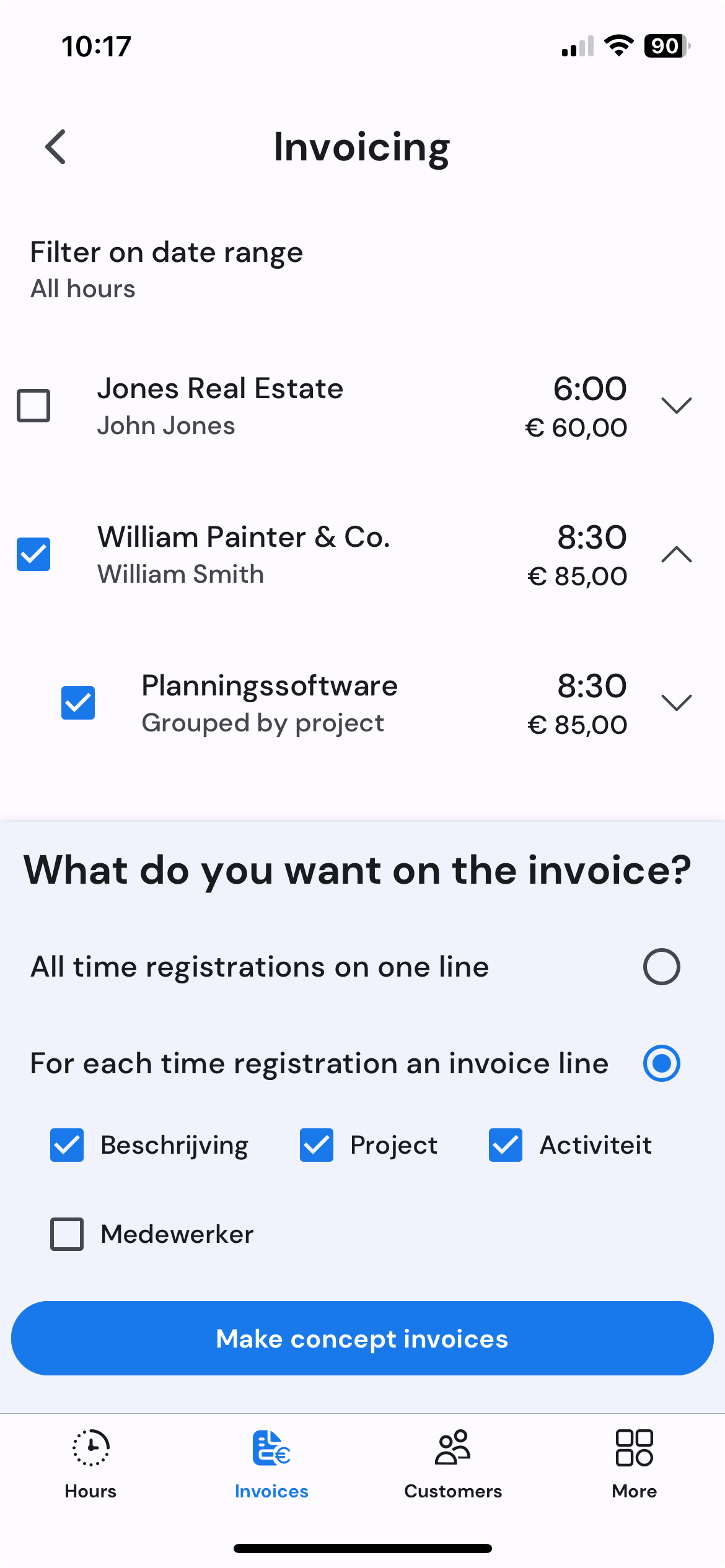
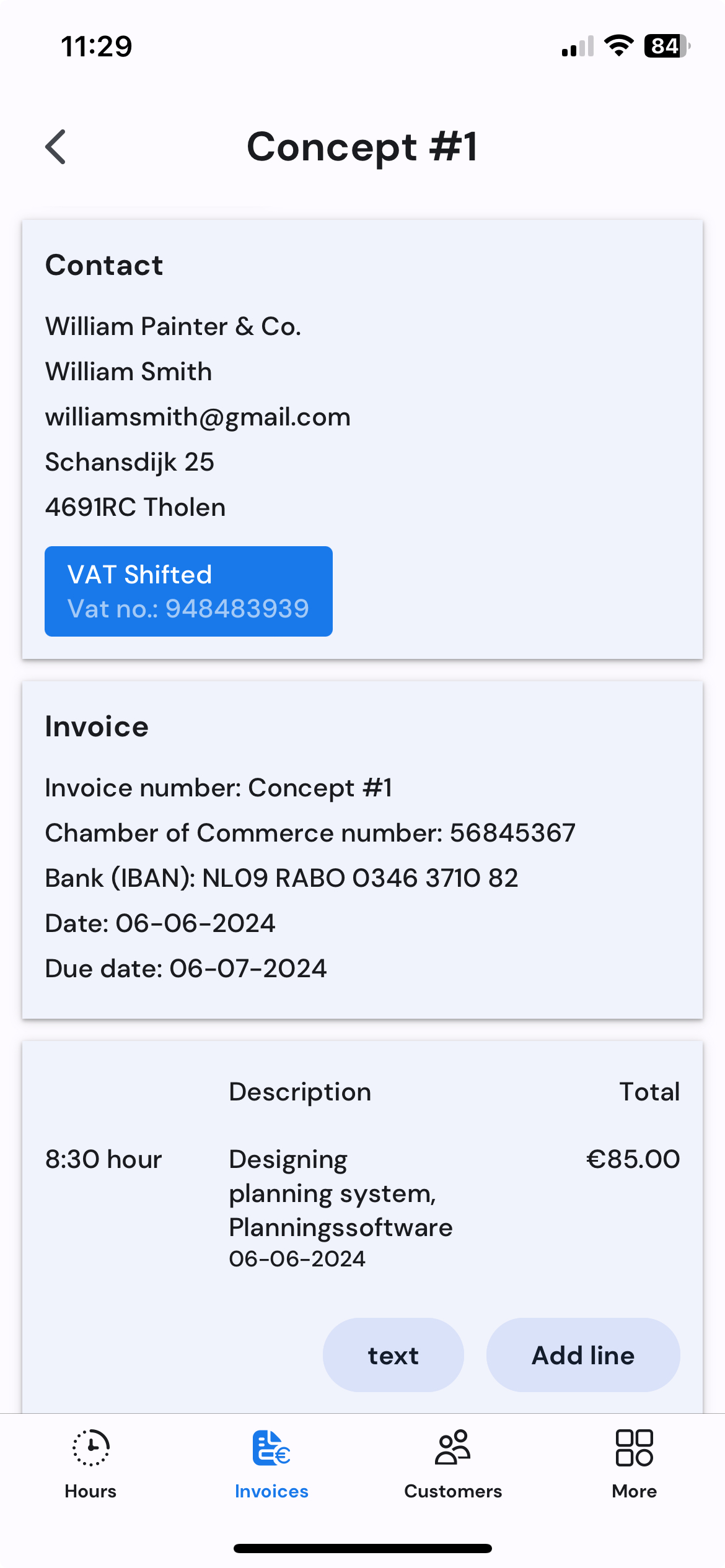
Invoice overview with approved hours on mobile Draft invoice details on mobile
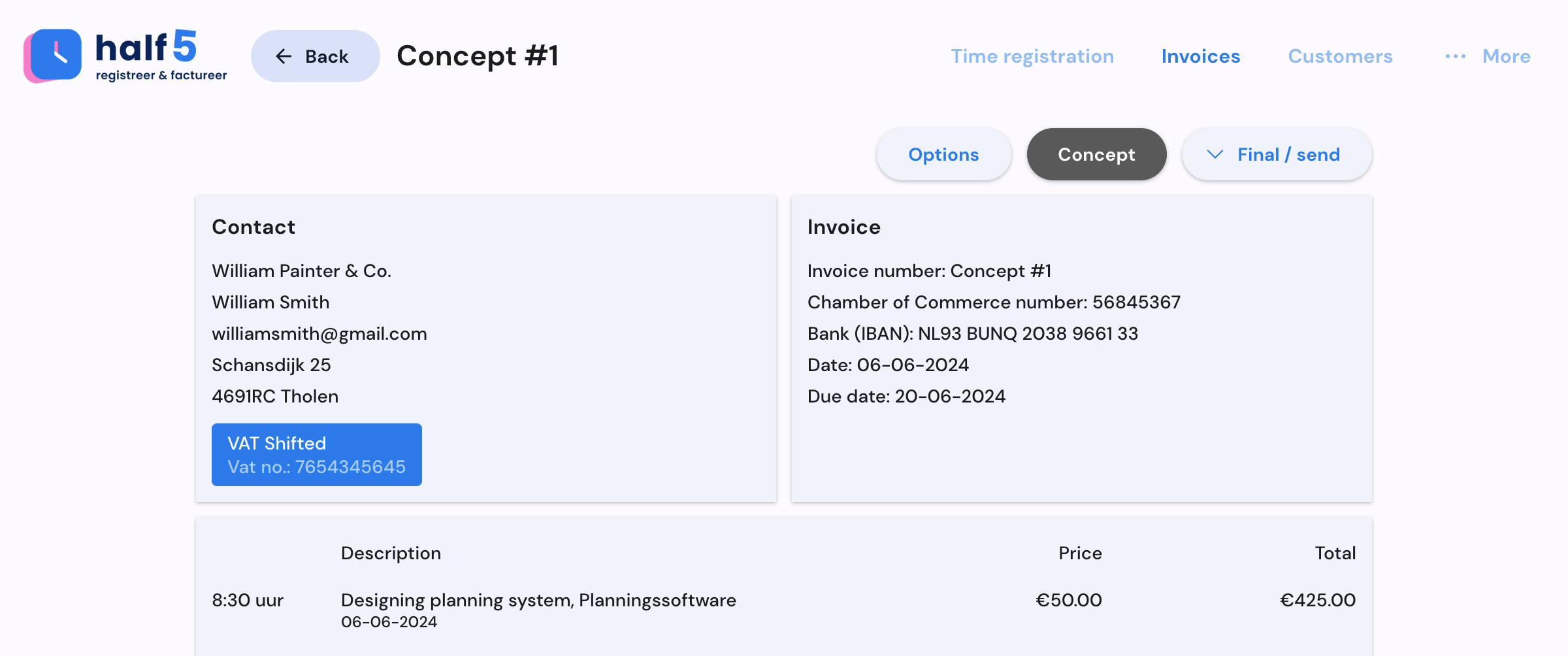
Invoice workflow on desktop
Invoice overview with approved hours on mobile Draft invoice details on mobile
OAuth authorize Exact Online without shared API keys
Draft invoices approved hours move toward finance review
Manual final step administration keeps the final decision
Exact Online finance route

Exact Online receives invoice-ready hours without exposing the personal timeline.

Half5 separates raw timeline context from business output: users submit hours, teams approve them and finance decides when Exact Online receives the draft invoice data.

01

Exact Online is authorized with OAuth

The connection is explicit and easier to govern than shared long-lived API keys.

02

Hours are approved before finance receives them

Users control suggestions first; managers and finance see submitted hours and exceptions.

03

Draft invoices are prepared in Exact Online

Approved work becomes invoice-ready data while administration keeps the final send decision.

What every role sees

Every role sees why Exact Online can be connected safely.

Before the start, it is clear which hours create revenue, what stays personal and which systems may use approved data only.

Users

The raw timeline stays personal; only submitted hours move forward.

Team leads

Exceptions and customer context are visible before invoicing pressure starts.

Finance

Approved hours arrive as data an invoice can rely on.

IT and agents

Systems and agents receive only data the organization is allowed to use.

What Exact Online connects

OAuth, contacts and draft invoices for teams with finance review.

Exact Online fits organizations where approved hours become draft invoice data, not uncontrolled automatic sending.

OAuth connection

Exact Online is authorized directly, without sharing long-lived API keys across the team.

Draft invoices

Approved hours move into Exact Online as invoice-ready data while finance keeps the final control moment.

Contacts in sync

Customer records stay aligned with the administration, so time entries and invoices refer to the same contacts.

Manual review

Sending and finalizing happen only after the team has approved time and finance has reviewed the invoice data.

In practice

Exact Online in the same invoicing route.

The same Half5 screens keep contacts, approved hours and invoice preparation together, while Exact Online stays the accounting destination.

Invoice selection from approved hours on mobile
Draft invoice details on mobile
Example

Draft invoices from approved hours

Half5 prepares invoice data from approved time entries so finance can review the final result in a predictable flow.

  • Approved time becomes the invoice source
  • Manual control over final sending stays with finance
  • Customer records stay connected with Exact Online
Invoice overview in Half5
Example

Built for teams with finance review

OAuth setup, synchronized contacts and explicit invoice steps make the integration easier to run across larger teams.

  • OAuth instead of shared API keys
  • Administration keeps the final decision
  • Clear visibility before invoicing
Invoice overview in Half5

More routes for approved hours

Accounting packages, CRMs and agents become powerful once they can use the same approved hours.

Live integrations can join the time process immediately. If your system is missing, we first look where approved hours can most quickly create revenue, reduce corrections or speed up invoicing.

If a system is missing, we decide together which team starts, which approved data may move on and when the integration pays for itself.

Discuss an integration